

Neck Pain Relief in Montréal
Neck pain can show up in many different ways, and figuring out why your neck hurts is an important part of finding the right approach to care.
- A stiff neck after a long day at your computer.
- Pain when checking your blind spot.
- Tingling that travels into your arm.
- A headache that seems to begin at the base of your skull.
Your neck supports your head while allowing you to nod, tilt, and turn throughout the day. It contains joints, muscles, ligaments, discs, and nerve pathways that work together to support movement and function. When something in this system is irritated, restricted, or under increased mechanical stress, you may begin to notice pain, stiffness, headaches, or changes in mobility.
At Clinique Chiropratique Hayden in Montréal, Dr. Natasha Hayden provides personalized chiropractic care for neck pain based on your symptoms, movement, lifestyle, and individual needs.
From your first visit, you’ll find a welcoming and supportive environment where your comfort is a priority. Dr. Natasha takes a patient-centred approach, listening carefully to your concerns and working together with you to create a plan that suits your needs, so you can feel confident about each step of your care.
What Does Neck Pain Feel Like?
Neck pain does not feel the same for everyone.
For some people, it is a constant ache or feeling of tightness. Others experience sharp pain with certain movements or notice symptoms that extend beyond the neck.
Common neck pain symptoms may include:
- Stiff neck
- Aching neck muscles
- Pain in the back of the neck
- Reduced range of motion
- Difficulty turning your head
- Pain when checking your blind spot
- Shoulder or upper back tension
- Pain radiating into the shoulder or arm
- Numbness or tingling
- Headaches associated with neck tension
- Pain at the base of the skull
The way your pain feels can provide important information about what may be contributing to your symptoms.
Why Does My Neck Hurt?
There is not always one single cause of neck pain. Postural habits, repetitive strain, joint restrictions, stress, injury, muscle tension, and age-related changes can all affect how the neck moves and feels.
Poor Posture and Tech Neck
How much time do you spend looking down at your phone, working on a laptop, or sitting at a desk? Tech neck refers to the prolonged forward-head position many of us naturally adopt while using phones, tablets, laptops, or other devices.
Your head weighs approximately 10 to 12 pounds when positioned neutrally. As your head moves forward, the effective mechanical load placed on the cervical spine can increase. Over time, this position may contribute to stress on the muscles, ligaments, joints, and other tissues surrounding the neck.

Common activities associated with prolonged forward-head posture may include:
- Phone use
- Laptop use
- Remote work
- Driving
- Reading
- Breast or chest feeding
This does not mean you need to maintain “perfect posture” every minute of the day. Changing positions, taking movement breaks, and reducing prolonged periods in a single fixed posture can be beneficial.
Can Stress Cause Neck Pain?
Have you ever noticed your shoulders creeping toward your ears during a stressful day?
Stress can affect muscle activity, movement patterns, pain sensitivity, and sleep. Some people may clench their jaw, elevate their shoulders, or hold tension through the neck and upper back as part of the body’s natural stress response.
Muscle guarding and myofascial trigger points, often described as “muscle knots”, may also develop.
Stress-related neck tension may be associated with:
- Tight neck muscles
- Shoulder tension
- Upper back discomfort
- Jaw clenching
- Tension-type headaches
- Increased pain sensitivity
- Sleep disruption
This is one reason Dr. Natasha may ask about your stress levels and sleep habits during a chiropractic assessment.
Your neck does not function separately from the rest of your daily life. Sleep, movement, work habits, and stress may all be relevant when creating your care plan.
Could Restricted Neck Joints Be Causing My Stiff Neck?
A cervical joint restriction refers to a reduction in the normal mobility of a joint in the neck.
When a joint is not moving as expected, it may be associated with local irritation, reduced range of motion, altered movement patterns, or muscle guarding.
You might notice:
- Difficulty turning your head
- A stiff or “stuck” feeling
- Muscle tightness
- Reduced neck mobility
- Discomfort with certain movements
- Headaches associated with the neck
The joints of the cervical spine also contribute to proprioception – your body’s awareness of movement, force, and position.
During a chiropractic assessment, Dr. Natasha examines how your neck is moving and looks for areas where mobility may be restricted.
Is It a Pinched Nerve in My Neck?
A “pinched nerve,” medically referred to as radiculopathy, may produce symptoms that differ from those of typical muscle tension.
Nerve-related pain may feel:
- Sharp
- Electric
- Shooting
- Burning
Depending on the nerve affected, symptoms may travel from the neck into the shoulder, arm, or hand. You may also experience numbness, tingling, pins and needles, or weakness.
Some people naturally change their posture to avoid aggravating the pain. You might tilt your head to one side, hold your neck stiffly, or avoid certain movements such as looking over your shoulder while driving. Muscle guarding is an involuntary contraction of the muscles around a painful area, intended to reduce movement, prevent further damage, and allow for healing.
A chiropractic assessment may help determine the possible source of your pain and whether chiropractic care is appropriate.
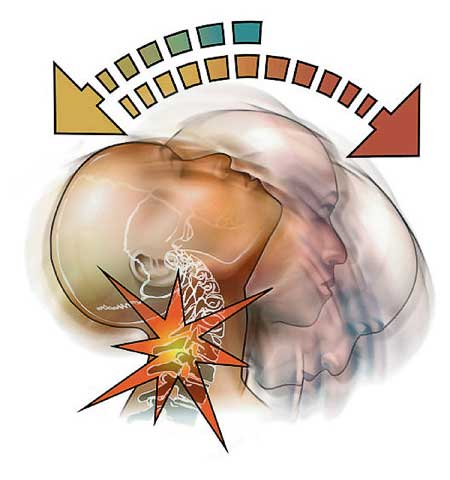
Neck Pain After Whiplash, Fall, or Injury
Neck pain can also develop after a car accident, sports injury, collision, or fall.
Whiplash-related neck pain may involve a combination of:
- Muscle injury
- Ligament involvement
- Cervical disc irritation
- Joint dysfunction
- Inflammation
- Changes in muscle function
- Nerve irritation
Chiropractic care may be used in appropriate cases to support movement, address muscle tension, and help patients gradually return to normal function. Generally, chiropractic care is best suited for symptoms such as muscle stiffness, reduced mobility, tension, or neck pain that is not accompanied by severe neurological symptoms. However, not every neck injury should begin with chiropractic treatment or self-care.
Seek urgent medical assessment if neck pain following significant trauma is accompanied by severe or worsening weakness or numbness, loss of coordination, difficulty walking, balance problems, loss of bowel or bladder control, loss of consciousness, confusion, persistent vomiting, or a severe headache unlike your usual headaches.
If you are a Québec resident and are unsure whether your symptoms require urgent medical care, you can contact 811 for guidance.
How Can a Chiropractor Help With Neck Pain?
At Clinique Chiropratique Hayden Inc., every patient receives an assessment before treatment recommendations are made. Dr. Natasha’s approach to neck pain treatment in Montréal may include several different strategies based on your symptoms and clinical findings.
Chiropractic Adjustments – Targeted chiropractic adjustments may be used to introduce movement to restricted cervical joints and support improved neck mobility. The exact technique is selected based on the individual patient.
Soft Tissue Therapy – Hands-on techniques, including motion cupping, IASTM (also known as Graston Technique or Gua Sha) to release tight muscles, reduce trigger points, and calm surrounding soft tissue tension.
Postural Correction Strategies – If prolonged sitting, tech neck, or forward-head posture is contributing to your symptoms, small changes to your daily routine may help reduce mechanical strain. This could include reviewing screen position, work habits, feeding positions, or the amount of time you spend in one posture.
Exercise and Rehabilitation – Targeted stretches and strengthening exercises may be recommended to support movement and help build resilience between chiropractic visits.
Lifestyle and Ergonomic Guidance – Sleep position, pillow support, workstation setup, and everyday movement habits can influence how your neck feels. These factors may be discussed as part of your overall care plan.
When Should I See a Chiropractor for Neck Pain?
It may be time to schedule a professional assessment if:
- Neck pain lasts longer than a week or two
- Your symptoms are getting worse
- Stiffness limits your daily activities
- You are regularly experiencing headaches with neck pain
- Pain radiates from your neck into your shoulder or arm
- You notice numbness or tingling
- Symptoms developed after an injury, fall, or accident
- Neck pain keeps returning
If you are experiencing severe weakness, loss of coordination, or other urgent neurological symptoms, seek immediate medical assessment.

Why Choose Dr. Natasha Hayden for Neck Pain Treatment in Montréal?
Dr. Natasha Hayden takes a whole-body, evidence-informed approach to chiropractic care, looking beyond the location of your pain to understand the factors that may be contributing to your symptoms.
Your neck pain is personal, and your treatment plan should be too. Neck Pain Treatment focuses on:
- Personalized treatment plans based on your symptoms and goals
- A whole-body perspective that considers how other areas may influence your neck
- Evidence-informed recommendations
- Education and prevention to help you better understand your body
- Long-term function and mobility, rather than simply chasing temporary relief
The goal is to help you understand what may be contributing to your neck pain and create a practical care plan based on your needs.
Find Neck Pain Relief in Montréal
Neck pain can affect how you work, sleep, drive, exercise, care for your family, and enjoy your everyday life. Whether you are dealing with a stiff neck, tech neck, neck-related headaches, restricted movement, muscle tension, or possible nerve irritation, understanding the source of your symptoms is an important first step.
If neck pain is limiting your movement or taking over your day, book a consultation at Clinique Chiropratique Hayden in Montréal to discuss your symptoms and explore a personalized chiropractic care plan.
Dr. Natasha Hayden welcomes patients from Montréal, Westmount, NDG, Côte-des-Neiges, Outremont, Ville-Marie, Verdun, and surrounding communities.